Written down or it did not happen
Every change plan, every sizing assumption and every run-book ends up in writing. The point of documentation is that the next person, often me eighteen months later, can reproduce what was done.
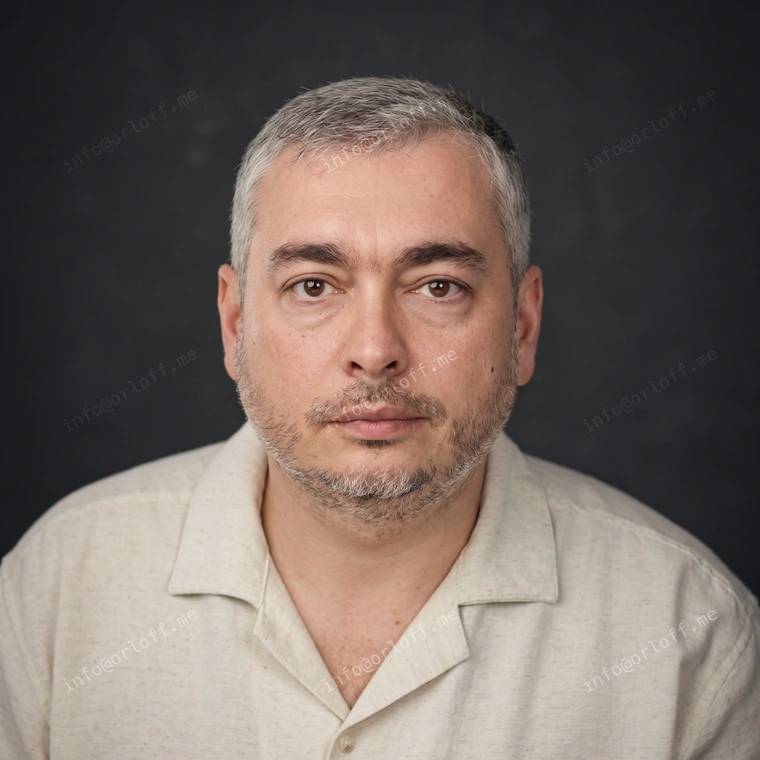
I have been in IT for 26 years and have spent the last two decades building and operating infrastructure. What I actually know how to do is follow a problem the whole way down: from the application on a user's screen, through the operating system, the hypervisor and the overlay network, to the switch port. That is the skill this business sells.
01 / Track record
Employers are described by sector and size rather than by name. What belongs to a particular organisation stays with that organisation.
Technical Architect
Network virtualisation with a DevOps toolchain, infrastructure as code in Terraform and pipelines in GitLab CI, sizing and capacity planning, and support to the operations team on the cases that do not yield to a run-book.
Half of the role was not engineering. I was the technical owner of the products built on that platform: what a service is actually made of, what it can and cannot be sold as, what it costs to run. The roadmap for those services started with me rather than arriving as a requirement to implement. Commercial ownership sat elsewhere; I supplied the cost and feasibility side of the business cases, and answered for the technical commitments inside them.
Systems Architect, cloud competence centre
Planning and delivery of the cloud platform lifecycle, new platform services, and technical designs built to specific customer requirements. Restarted a stalled second data centre build and brought it to launch.
Lead Engineer
Built a public cloud platform on VMware from nothing. Built DDoS protection and upstream traffic analysis for the carrier network. Monitoring and remote management of customer endpoints. Migration of office telephony to Lync. Application performance management on Riverbed. Delivery of European cloud data centre capacity to regional clients.
Head of Systems Administration
Technical head of IT across every regional unit: strategy, technical choices, business cases to the board, budgeting and total cost of ownership. Led the systems administration function and the technical work of the departments reporting into it. Built a fault-tolerant distributed data centre with replication between sites, and moved the main server room into a new building, cabling plant included.
Senior Systems Administrator
Microsoft, Linux and Solaris platforms, a small team reporting to me. Migrated the environment off Sun and Solaris, introduced Active Directory, moved mail onto Linux, put the internet gateway on Linux with automatic channel failover, replaced the PBX and rolled out DECT, deployed video surveillance and access control, and designed and commissioned the cabling and server room for a new building.
Systems administration and development
Client and office networks on Windows and Linux, PBX administration, design and construction of a district network, a billing system written from scratch, business-application configuration development, and web development in Perl and PHP.
Software developer
Built the distributed databases that fed the firm's central ledger. Each client company, manufacturers and furniture retailers among them, ran its own copy and exchanged with the centre over dial-up. I wrote the software that drove the modems and the exchange protocol running on top of them. A line would drop in the middle of a transfer and a site could stay unreachable for a day, so replication had to survive that and converge regardless. This is where I learned what the bottom of the stack does to the data at the top of it.
The organisations above were employers. This business was registered in Georgia in 2026 and works with its own clients under its own services agreements.
02 / Capability
I have run all of it in production. The first five are the column itself, listed top to bottom; the rest run across every layer of it.
03 / How the work has changed
For the last few years the biggest change in how I work has been AI, and I have taken it further than most people in operations have. It is wired into the ordinary working day.
In practice: agents take the first pass at log triage and incident context, draft and review infrastructure-as-code, keep run-books and technical documentation current instead of six months stale, cross-check live configuration against the inventory, and absorb the routine checks that used to quietly consume a working morning. The dull half of the work stops competing for attention with the half that needs judgement.
The discipline that makes this safe is short and I do not bend it: nothing reaches production without a human reading it first, and anything a machine asserts about your infrastructure is verified against your infrastructure before anyone acts on it. That discipline is the whole difference between a force multiplier and a very fast way to break things with confidence.
Where your data goes is your decision, made before any work starts, and it sits inside the non-disclosure agreement rather than being left to my judgement. With your written agreement I use public AI services. Where that is not acceptable, and for plenty of clients it is not, I run local models on my own hardware instead, and nothing about your infrastructure crosses the perimeter we agreed on.

04 / Proof
Some of these are vendor certifications, others are vendor training courses completed. Certificates are available on request.
05 / Practice
Every change plan, every sizing assumption and every run-book ends up in writing. The point of documentation is that the next person, often me eighteen months later, can reproduce what was done.
Infrastructure that exists only in someone's head is a liability. If it can be a Terraform module or a pipeline, it should be one.
An estimate that hides its assumptions is not an estimate. If something is a guess, it is labelled as a guess.
Faults rarely respect the boundary between the application, the operating system, the hypervisor and the network. Having run all four, I do not have to hand the problem over at the boundary.
06 / Practical
Based in Kobuleti, Georgia. Working hours overlap the European working day. The work is remote, which is how infrastructure is run anyway, but I have run data centre and cabling projects on site and know the difference.